AI publishing case study
549 AI-assisted books. $19,701 total. A stranger result than the hype.
This is the public case study from an AI publishing operation that ran for 17 months. The machine worked technically. The economics were smaller, flatter, and more fragile than the usual pitch.
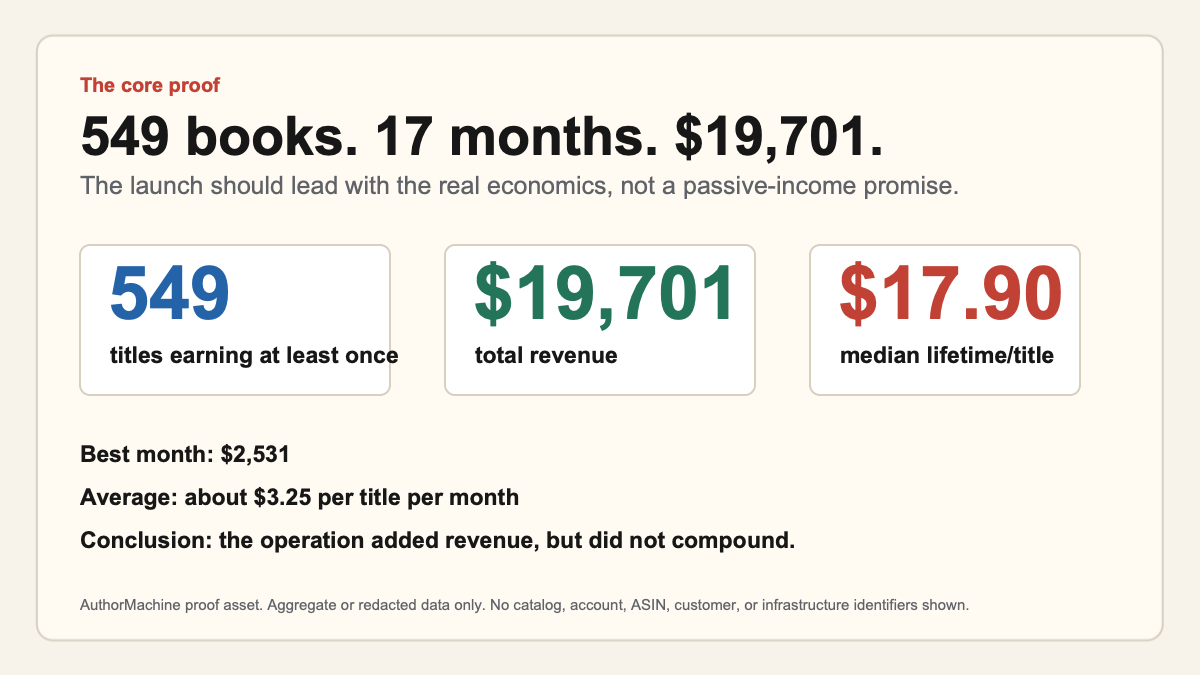
The short version
The operation produced 549 titles that earned at least once. Across 17 months, those titles earned $19,701. The best month was $2,531. The median title earned $17.90 in its entire life.
That combination matters. The system generated real revenue, but it did not behave like a compounding software business. It behaved like a catalog where each title added a small amount of revenue and a larger amount of operational risk.
Why this case study exists
Most AI publishing material sells either fantasy or outrage. This case study is meant to be more useful than both. It shows the numbers, the automation layer, the quality-control burden, and the failures that changed the operating rules.
- Revenue was real, but the median title was tiny.
- The catalog grew, but revenue per title stayed roughly flat.
- Five listings were killed in two days.
- A shared favicon exposed the persona layer.
- Automation accelerated mistakes as much as output.
Related public pages
Start with the real numbers
Module 0 is free and ungated. It shows the revenue, the median title, the cost structure, and why this is not a passive-income pitch.